
From the Garden to the Plate: Practical Recipes with Ingredients from the Vegetable Garden
Growing your own food is a pleasure that goes beyond the aesthetics of a well-kept garden. It’s the opportunity to harvest fresh, healthy, and flavorful ingredients straight from the vegetable garden to enrich everyday cooking. More than a trend, this practice represents a mindful lifestyle that values time, care, and the simplicity of natural flavors.
Anyone with a garden at home knows the joy of picking the first ripe tomato or smelling freshly trimmed basil. But it’s not always easy to know how to turn these green treasures into truly delicious and easy-to-prepare dishes. With that in mind, we’ve put together some practical recipes and tips to make the most of what you grow, turning every meal into a flavorful, nutritious experience connected to the earth.
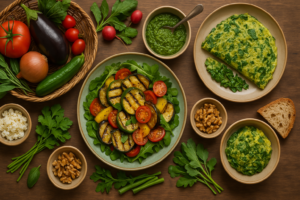
Warm Grilled Vegetable Salad
A delicious way to highlight vegetables from the garden is to grill them. This technique enhances the natural flavor of the ingredients and adds an irresistible smoky touch. For this warm salad, you can use zucchini, eggplant, bell peppers, red onion, and even cherry tomatoes.
Preparation:
- Cut the vegetables into slices or medium pieces.
- Heat a large skillet or grill pan with a drizzle of olive oil.
- Grill the vegetables until lightly browned and tender.
- Season with salt, black pepper, and fresh herbs like thyme, rosemary, or oregano harvested from the garden.
- Serve warm over greens like arugula or spinach.
You can top it with feta cheese shavings, toasted nuts, or even cooked grains like quinoa for a complete meal. It’s a perfect option for lunch or a light dinner without hassle.
Pesto Sauce with Garden Herbs
Pesto is a versatile classic, perfect for pasta, sandwiches, or as a side for roasted vegetables. And best of all: you can vary the recipe with the herbs you have in your garden.
Ingredients:
- 2 cups of fresh leaves (basil, parsley, arugula, or cilantro)
- 1/3 cup of walnuts, almonds, or cashews
- 1/2 cup of olive oil
- 1 garlic clove
- 1/4 cup of grated Parmesan cheese
- Salt and pepper to taste
Step-by-step:
- Place all ingredients in a food processor or blender.
- Blend until a creamy, smooth sauce forms.
- Adjust the salt and store in an airtight jar in the fridge for up to 5 days.
Pesto is an excellent way to preserve fresh herbs, avoid waste, and add a gourmet touch to everyday meals.
Green Omelet with Garden Leaves and Herbs
Perfect for any meal, an omelet is quick, nutritious, and ideal for using whatever’s abundant in the garden. Try using spinach, Swiss chard, green onions, parsley, mint, and even carrot or beet greens.
Preparation suggestion:
- In a bowl, beat 3 eggs with a pinch of salt and pepper.
- Add a handful of washed and chopped greens and fresh herbs to taste.
- Heat a non-stick skillet with a drizzle of olive oil.
- Pour in the mixture and cook over medium heat, folding it in half when firm.
- Serve with a green salad or a slice of rustic bread.
This simple recipe gains personality with fresh garden ingredients and can be adapted according to the season.
Tips for Cooking with Garden Ingredients
- Harvest with intention. Avoid picking more than necessary. This keeps plants healthy and productive.
- Use stems and leaves. Beet stems, radish greens, and carrot peels can be sautéed, used in broths, or even in green juices.
- Always use fresh herbs when possible. Fresh rosemary, thyme, sage, and basil elevate any dish with incomparable aroma and flavor.
- Vary the preparation. Even with few ingredients, try roasting, grilling, sautéing, or serving raw. Each technique brings out different flavors.
Turning the Kitchen into an Extension of the Garden
Bringing ingredients from the garden to the plate is more than cooking — it’s a form of connection with the natural rhythm of things, with the care we devote to the earth, and with our health. It also provides meals richer in nutrients, intense flavors, and a deep sense of fulfillment.
Even with limited space, like a balcony or porch, it’s possible to grow some herbs and vegetables and incorporate them into daily life. Over time, you’ll realize that the flavors harvested from your vegetable garden are unmatched — and that the joy of cooking grows when you know the origin of each ingredient.Whether it’s for a simple salad, a homemade sauce, or a more elaborate meal, using what comes from the garden is a practical and pleasurable way to bring more freshness and well-being to the table. Start with what you have, care for it with love, and enjoy the flavor of eating what you’ve grown yourself.